Sight Unseen

It took a moment for the news to sink in. I had a grandmother. My cousin, sitting at my dining-room table, laid out pictures one at a time. “This is your aunt. This is your grandmother.” My what?

A few weeks prior to this visit, I had shared my birth mother’s name with my cousin. For fifty-three years, I didn’t know anything about my birth family. Then the state offered adoptees their original birth certificates for a small fee. There were no promises that names of birth parents would be on them, but it was worth the chance. I had forgotten I had even sent for it when, six months later, a piece of mail with the official state logo arrived in my mailbox. It didn’t jump out at me as I opened the day’s mail, and I thought it was probably just a notice to renew my car registration or something like that.

Then I opened it, and goose bumps pushed the hair on my neck straight up as I pulled my birth certificate from the envelope. There it was, my mother’s name. There was no father’s name, but this was enough—I had my birth mother’s name.

My cousin has a genealogy business. She had looked for my birth mother before with no luck. But now she had a name. It didn’t take her long to find her. “I have news. I’ll come to your house at four.” And there we were, looking at pictures of people who looked like me. “Unfortunately, your mother has passed away. But I spoke to your aunt. She told me the whole story and is very interested in meeting you.” She set another picture on the table. “And this is your grandmother.” I have a grandmother. I couldn’t believe it.

After two days of processing the pictures and information, I decided to call my aunt. With shaky hands, I dialed her number. She answered, and my mouth went dry. I introduced myself. Her voice quivered, “Oh, honey, I’ve thought about you and wondered where you were for fifty-three years.”

She shared my mother’s story with me. My mother was not married and had a four-year-old daughter. There was no way she could afford another child. The decision was made to give me up for adoption, and they never discussed it again. My aunt and my grandmother retired to Florida. Not fond of Pennsylvania’s cold weather, I told her, “I am not opposed to visiting Florida this winter.” She was thrilled. We made plans to meet.

I was excited and nervous at the same time. Would they accept me? It’s one thing to talk on the phone and exchange e-mails, yet another to meet face to face.

After checking into a hotel and getting some lunch, it was time for Meeting #1: with my aunt and uncle. My cousin Joan and my son Jason were with me. As soon as we pulled into their driveway, my uncle appeared on the porch with a big smile on his face. I thought they surely could see my heart pounding. As I approached him, he welcomed me and opened the door. My aunt stood just inside. With tears in her eyes, she gave me a big hug. I heard my uncle say, “When she got out of the car, it could have been Jeannie.” That was my birth mother’s name.

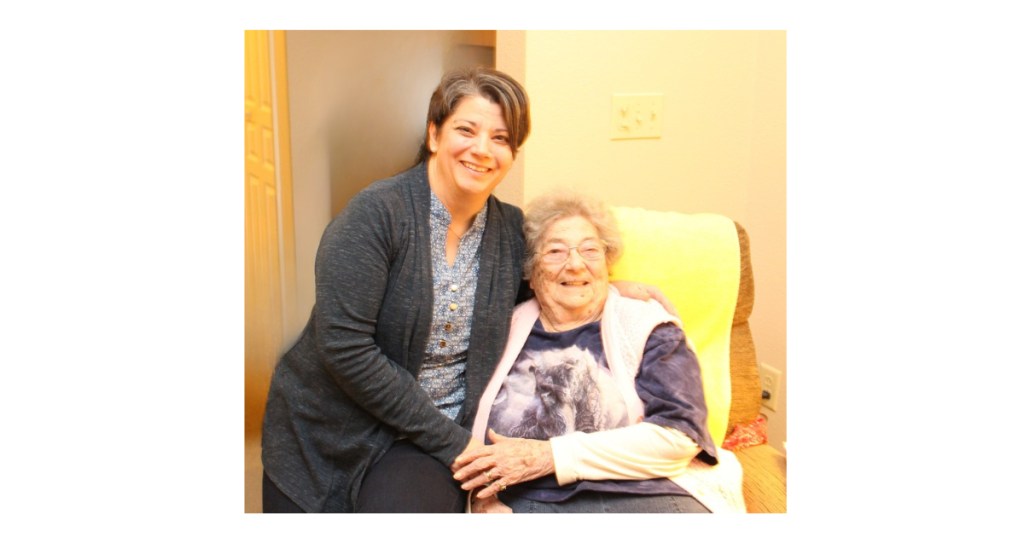
We had a delightful time looking at pictures and telling stories. Laughter punctuated the conversation. It was a great start to our visit. After supper, we went to the assisted-living facility where my grandmother lives. She was excited to meet me. As she turned in her chair to see me, she shook her head and said, “Oh, my.” For a few seconds, she just stared at me. Then she took my hands in hers and said, “It’s my Jeannie.” She looked so happy. She echoed my aunt, “I always wondered what happened to that baby. Where was she? Was she alright?” We hugged and then talked about her life and stories of my mother growing up.

The next day, we all went to visit my great-aunt, who was ninety-nine. She stared at me for a few seconds, too, before saying to my grandmother, “That’s your Jeannie.” We had an amazing time with the two of them—more stories, more laughter. So many times, when I laughed or gestured, they would say, “That’s Jeannie.”

As I said goodbye to my grandmother that night, she hugged me tight and said, “I love you.” At first, I wondered how she could love me—she didn’t really know me. But in an instant, I understood why she could say that: I’m her granddaughter. It’s the same way I love my grandchildren from the moment I see them. Even before they were born, I loved them. This visit was the meeting most of us have at the hospital, peering into the nursery, figuring out whose nose she has. My grandmother didn’t have that experience, but she often wondered about me, and she loved me. It was easy for her say “I love you” because she has for fifty-three years, sight unseen.

The nerves have been replaced with a sense of overwhelming blessing. What a gift to have a grandmother and other new family members who love me. Who knows? Maybe there is more blessing to come—they gave me the name of my birth father.

“You created my inmost parts. You wove me together in my mother’s womb. How precious are your thoughts for me, God! How vast is the sum of them!” (Psalm 139:13,17 NIV)
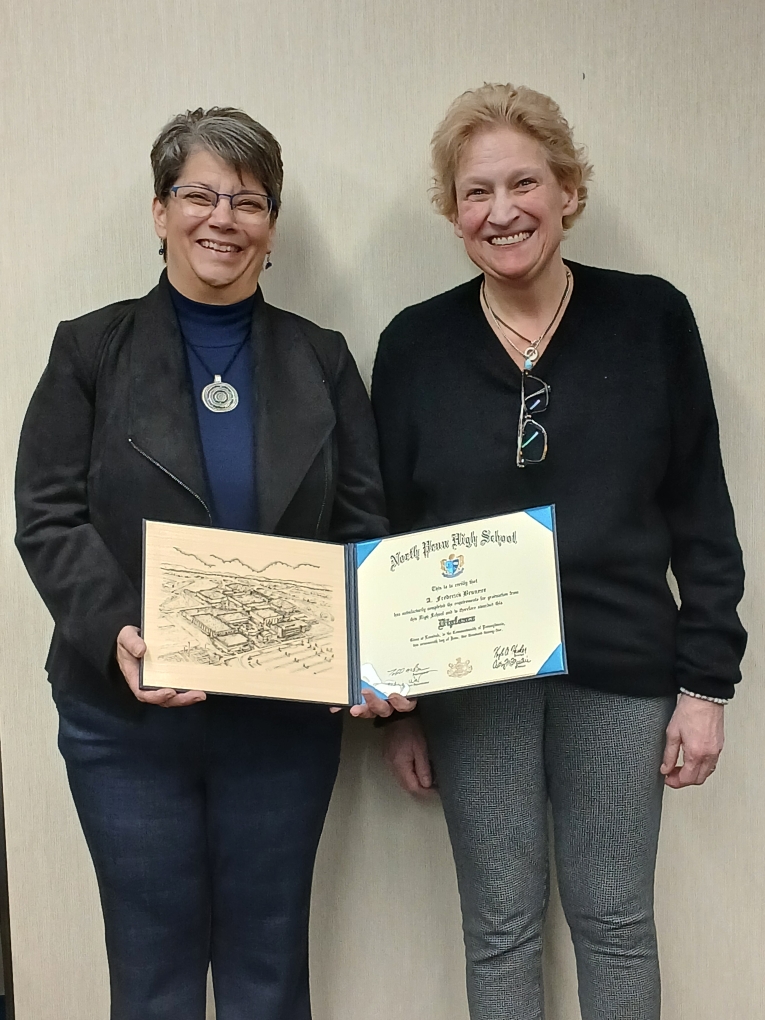
Dad’s Diploma–80 years in the making

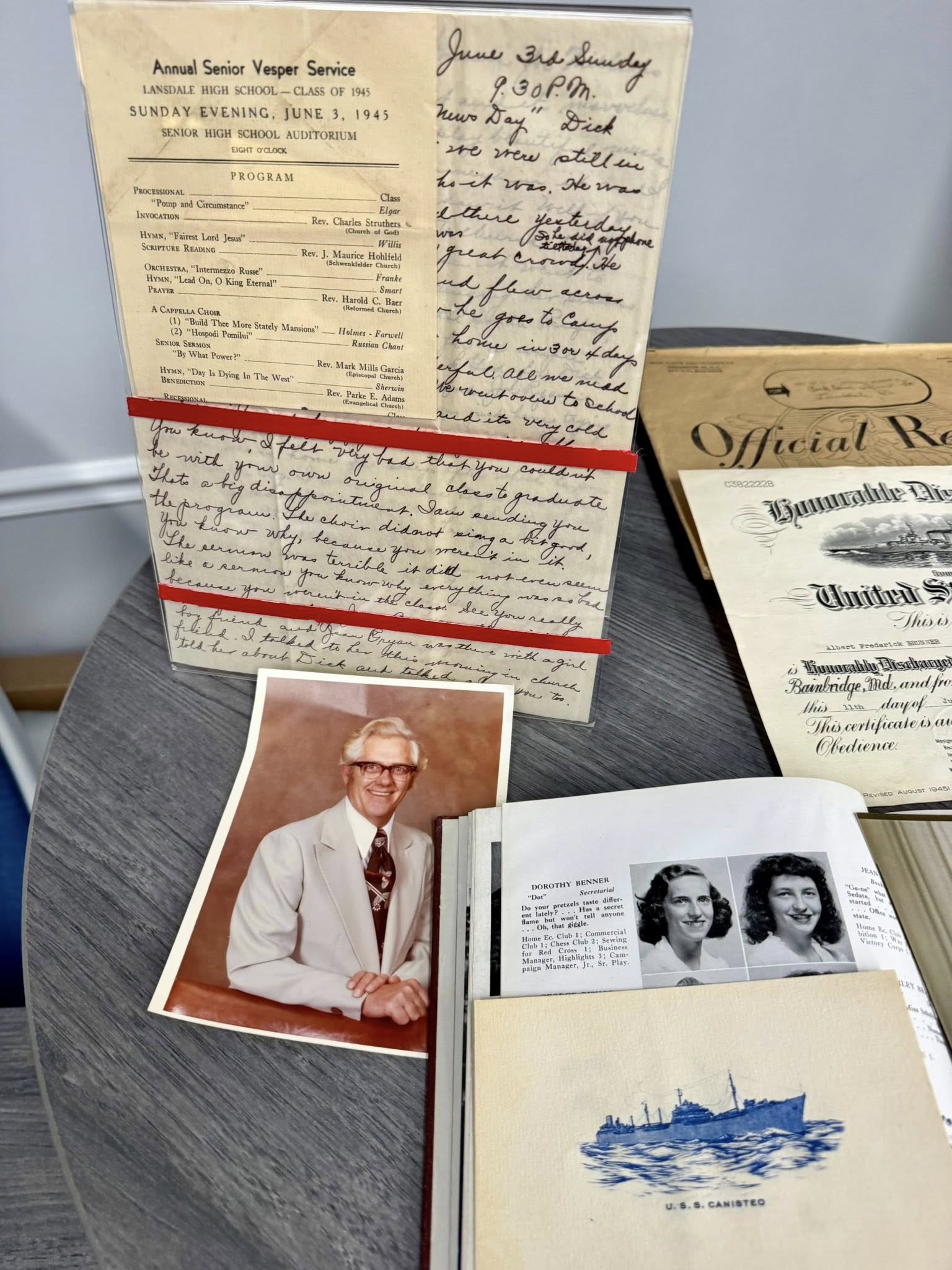
In the spring of 1945, high school seniors were being drafted into the Army. My dad was a senior that year and was willing to join the war effort but not willing to join the Army. So, he dropped out of high school and enlisted in the Navy on May 23, 1945.

I have a shoebox full of letters between him and my grandmother from bootcamp to discharge, all in perfect cursive and complete sentences—it’s hard to believe he was just a seventeen-year-old boy. One of her letters described the Vesper Service on June 3, 1945. She wrote, “You know I felt very bad that you couldn’t be with your own original class to graduate. That’s a big disappointment. I am sending you the program. The choir did not sing a bit good. You know why, because you weren’t in it. The sermon was terrible. It did not even seem like a sermon. You know why everything was so bad because you weren’t in the class. See you really rate, you dear thing.” He really did have an excellent voice with perfect pitch.

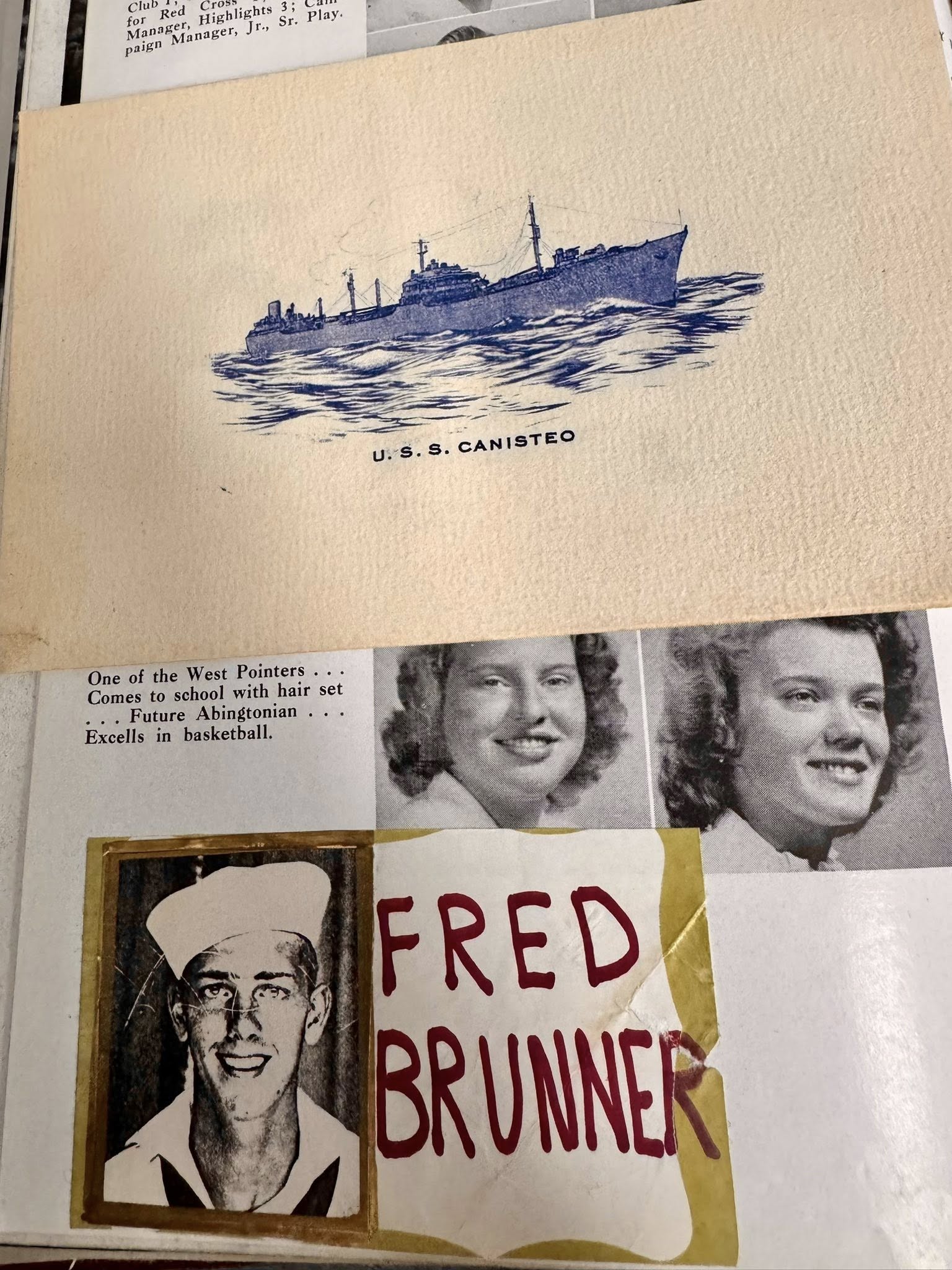
His time in the Navy took him all over the world. He described Aruba as a hot wasteland no one would ever want to visit! I guess there was no tourist industry on that island in the 1940s. He was in awe of a newly commissioned aircraft carrier that his ship was docked next to in the Caribbean. It was the USS Midway. He went to Europe and the South Seas before being discharged in June 1946. The war was over. It was time to send the boys home.

By this time, his father had died, and his mother had to go to work. She wasn’t able to keep their beautiful home, described as the most beautiful home in town back then. When Dad arrived at home, he needed a job but didn’t have a high school diploma. He earned his GED and went to work for the US Post Office, but it always bothered him that he wasn’t awarded a diploma because he left school two weeks before graduation.

As part of a Veteran’s Day celebration, North Penn School District awarded my dad (and four other veterans) their diplomas last night. It comes eighty years later than it should have and twenty-seven years after his death. But he would be grateful—that’s just how he was. Gentle, kind, patient, a Navy veteran, and now a high school graduate.

My Family Was Racist

I will admit it, my family was racist. We try to whitewash it, but my grandmother’s generation talked about black people in a way that could only be considered racist. They were born just before or after 1900 in Philadelphia. One great aunt, who never married, lived and worked in the city until she was about ninety years old.

I would pick her up from her home in Olney (pronounced Ol-eh-nee, like Ack-a-mee [Acme] by locals) for special events and visits to our house in the suburbs. As we would turn onto Olney Ave., she always commented, with a sweeping wave of her hand, “Olney used to be such a nice neighborhood, but now it’s all black.” We forced her to leave the city after she was mugged a second time, breaking her shoulder. Her neighborhood was too dangerous. She blamed the “blacks.”

Another great aunt lived a few blocks from us. She was not at all happy when a black couple moved into the home next to hers. She couldn’t believe “blacks were coming to Lansdale.” She had a “there goes the neighborhood” attitude, sure that “blacks didn’t take care of their homes.” But over the first year of being neighbors, her attitude changed. She didn’t receive any race-relation education or had any sort of spiritual awakening. What made the difference were the black people living next to her. They were really nice. They took good care of their home and offered help with hers. They were kind to her, and their kindness and character changed her. Dr. King would have been proud.

My mother’s generation wasn’t as overtly racist, and I am sure my mom never taught us to be racist. But I don’t remember her ever teaching us that people of other races were no different than us and should be treated as such. She did have one mantra that I remember, “kill them with kindness.” If someone mistreated you, be kind in return.

The town I grew up in simply didn’t have many black people in it. There were none in my elementary school. Then in sixth grade a new student joined our class. He was from Uganda, East Africa. Wow, I wondered why he came to live in my small Pennsylvania town. It didn’t take long to find out. Our teacher asked him to share why his family had moved from Africa to the United States. He said that in his home country, a very bad man, Idi Amin, was killing people who, in his opinion, didn’t have dark enough skin. Since this boy’s family had lighter skin than the average African, his father decided it wasn’t safe for them in Uganda, so they escaped and fled to the United States.

I remember thinking how awful to be at risk of being killed because of the color of your skin. They were able to bring their whole family with them. At least they had each other to start a new life in a new country—a country offering freedom for people of all skin colors. This experience changed my thinking toward black people. My family was wrong. A person’s skin color didn’t make them any better for worse than anyone else. It was their character that counted. Racism in my family was losing its grip.

My family’s come a long way in just a few generations. Racial barriers have been demolished as people of different races became family members. I think my grandmother’s generation would be happy about the change, because they would have the privilege of knowing and loving other races as family. I believe our country has come a long way too, but obviously we still have work to do. Like any family, Americans won’t all hold the same political, spiritual, or moral beliefs, but we can still show love and kindness to one another because that’s what family does.

“Let all bitterness and wrath and anger and clamor and slander be put away from you, along with all malice. Be kind to one another, tenderhearted, forgiving one another, as God in Christ forgave you. Therefore, be imitators of God, as beloved children.” (Ephesians 4:31-5:1 ESV)